Proactive vs Reactive Conversational AI: Why Enterprises Are Building Systems That Start the Conversation
 by
by 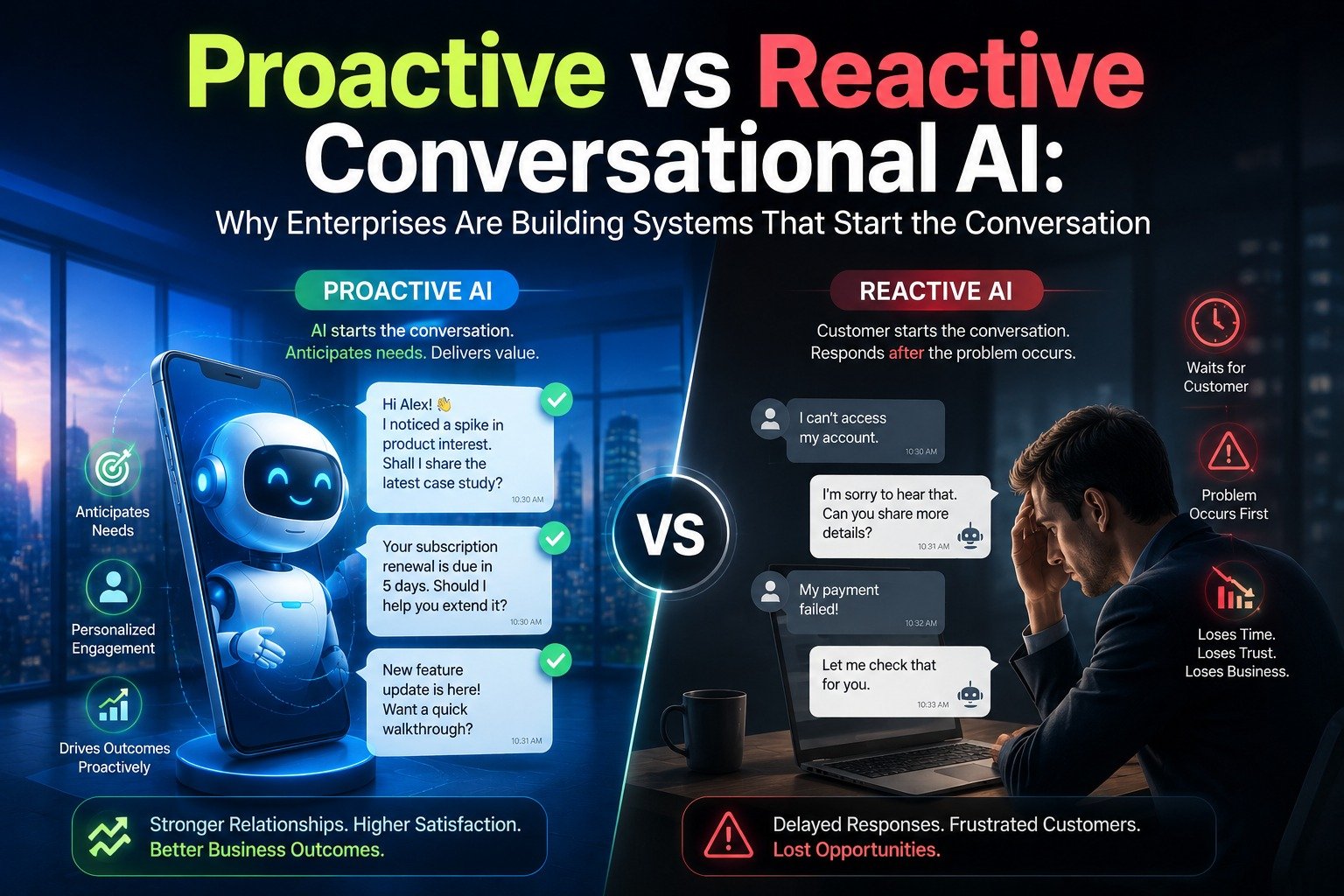
The next frontier of enterprise AI isn’t answering customer questions faster, it’s knowing when to start the conversation before customers even ask. For more than a decade, enterprise Conversational AI has largely operated in a reactive mode.
A customer has a problem. The customer reaches out. The chatbot responds. This model has helped organizations automate support, reduce operational costs, and improve service availability. Yet, despite these gains, many enterprises still struggle with a fundamental challenge:
Customers often contact businesses only after frustration has already occurred.
A payment has failed. A shipment is delayed. A policy renewal has been missed. A customer is already considering switching providers. Leading organizations are now addressing this challenge by adopting proactive Conversational AI, AI systems capable of continuously monitoring business events and initiating contextual conversations automatically.
This evolution is rapidly emerging as one of the most important themes shaping enterprise customer engagement and has become a major discussion point at the Conversational AI & Customer Experience Summit.
What Is the Difference Between Reactive and Proactive Conversational AI?
Traditional Conversational AI systems are reactive by design. The interaction flow typically follows this sequence:
Customer initiates → AI responds → Issue resolved
Reactive systems remain highly valuable for customer support, self-service, and FAQ automation. However, they rely on customers recognizing a problem and actively seeking assistance. Proactive AI fundamentally changes this paradigm. The interaction becomes:
Business event detected → AI initiates → Customer engages
Instead of waiting for inbound inquiries, proactive systems analyze real-time business signals, customer behavior, and operational events to determine when outreach is required.
Examples include:
- A bank detecting suspicious account activity and immediately initiating a verification conversation.
- An airline proactively notifying passengers about schedule disruptions and presenting alternative options.
- An insurance provider identifying missing documentation and automatically engaging policyholders before compliance deadlines are missed.
- An e-commerce platform recognizing potential cart abandonment and initiating personalized purchase assistance.
In each scenario, AI acts not as a support channel, but as an intelligent engagement layer embedded within business operations.
Why Enterprises Are Moving Toward Proactive AI
1. Customer Expectations Have Changed
Modern consumers increasingly expect organizations to anticipate their needs. Digital leaders such as Netflix, and Uber have conditioned customers to expect personalized, timely, and context-aware interactions. Consequently, reactive support models alone are no longer sufficient to deliver differentiated customer experiences.
Organizations that anticipate customer needs are often better positioned to strengthen loyalty and reduce friction across the customer journey.
2. Preventing Problems Is More Efficient Than Solving Them
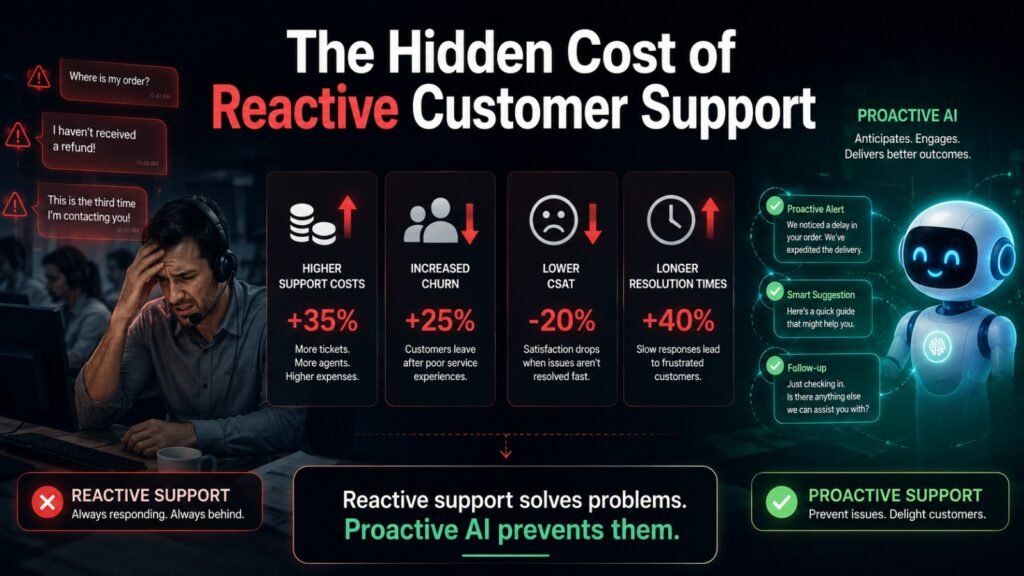
Reactive service models create significant operational pressure. High inbound contact volumes, long waiting times, and repetitive support requests increase costs while negatively affecting customer satisfaction.
Proactive customer experience automation enables organizations to address issues before they escalate, reducing support demand and improving service efficiency. For many enterprises, the financial impact can be substantial.
3. Proactive Engagement Creates Business Value
Beyond cost reduction, proactive engagement directly influences:
- Customer retention
- Revenue growth
- Cross-sell and upsell opportunities
- Regulatory compliance
- Brand trust
- Customer lifetime value
As a result, proactive AI customer engagement strategies are increasingly becoming strategic priorities for enterprise leaders.
Building Proactive Conversational AI: A Practical Framework
While the concept appears straightforward, building proactive systems requires significantly more sophistication than deploying traditional chatbots. Successful implementations typically include the following components.
Establish an Event-Driven Architecture
The foundation of proactive AI is business-event detection. Organizations must identify events that warrant customer outreach, such as:
- Failed transactions
- Delivery delays
- Service outages
- Subscription renewal risks
- Inventory shortages
- Fraud alerts
- Compliance deadlines
These events become triggers that initiate automated conversations.
Integrate Enterprise Data Sources
Proactive AI depends on access to accurate, real-time data. Key systems commonly integrated include:
- CRM platforms
- ERP systems
- Customer Data Platforms (CDPs)
- Contact center solutions
- Billing systems
- Analytics platforms
- Operational databases
Without unified data, personalization and contextual engagement become difficult to achieve.
Implement Intelligent Decisioning
Not every business event should trigger customer communication. Advanced decision engines evaluate multiple factors before initiating outreach, including:
- Customer value
- Historical interactions
- Sentiment
- Channel preferences
- Urgency
- Business impact
This ensures that conversations remain relevant, timely, and helpful.
Orchestrate Conversations Across Channels
Customers increasingly interact across multiple touchpoints, including:
- Web chat
- Voice AI
- SMS
- Mobile applications
Enterprises must ensure that proactive conversations remain seamless and contextually consistent regardless of channel.
Challenges Enterprises Must Address
Despite its benefits, proactive AI introduces several implementation challenges.
Data Quality and Governance
Poor-quality data can result in inaccurate or irrelevant interactions.
Strong governance frameworks are essential to ensure reliability and trust.
Customer Consent and Privacy
Organizations must carefully manage communication preferences, regulatory requirements, and consent policies.
Over-communication can quickly undermine customer trust.
Balancing Automation and Human Oversight
Not every interaction should be automated.
Complex, sensitive, or emotionally charged situations often require human involvement. Leading enterprises therefore design proactive AI systems with clear escalation pathways.
The Future of Conversational AI Is Proactive
The next generation of Conversational AI will not be defined solely by response accuracy or automation rates. It will be defined by an organization’s ability to anticipate needs, prevent issues, and deliver meaningful engagement at the right moment.
As discussions continue across the Conversational AI & Customer Experience Summit, one trend is becoming increasingly clear:
Reactive chatbots are evolving into proactive digital engagement systems that actively participate in customer relationships.
Organizations that successfully combine business signals, intelligent decision-making, and contextual communication will be better positioned to deliver exceptional customer experiences in the years ahead.
The future of enterprise customer engagement will not belong to organizations that simply respond. It will belong to those that anticipate.
FAQ's
Proactive Conversational AI refers to AI systems that initiate conversations automatically based on real-time business signals, customer behavior, or operational events, rather than waiting for customers to ask questions.
Reactive Conversational AI responds only when customers initiate contact, while proactive AI identifies triggers such as payment failures, service disruptions, or churn risks and starts the conversation automatically.
Enterprises are adopting proactive Conversational AI to improve customer experience, reduce support costs, increase customer retention, and address issues before they escalate into larger problems.
Common examples include banks alerting customers about suspicious transactions, retailers notifying customers about delivery delays, insurers sending policy renewal reminders, and telecom providers proactively addressing service outages.
Building proactive Conversational AI systems typically requires CRM integration, real-time data platforms, event-driven architecture, AI decision engines, analytics tools, and omnichannel communication capabilities.
Proactive AI enhances customer experience by anticipating customer needs, providing timely assistance, reducing customer effort, and delivering personalized interactions across multiple channels.
Industries such as banking, insurance, retail, healthcare, telecommunications, and travel benefit significantly from proactive Conversational AI due to their high customer interaction volumes and operational complexity.
Organizations should address challenges related to data quality, privacy regulations, customer consent, governance, and maintaining the right balance between automation and human intervention.
Yes. Proactive Conversational AI can reduce support costs by resolving issues before customers contact support teams, lowering inbound call volumes, and increasing self-service adoption.
The future of Conversational AI lies in predictive and proactive engagement, where AI systems continuously analyze business signals and initiate highly contextual, personalized conversations that improve both customer experience and business outcomes.